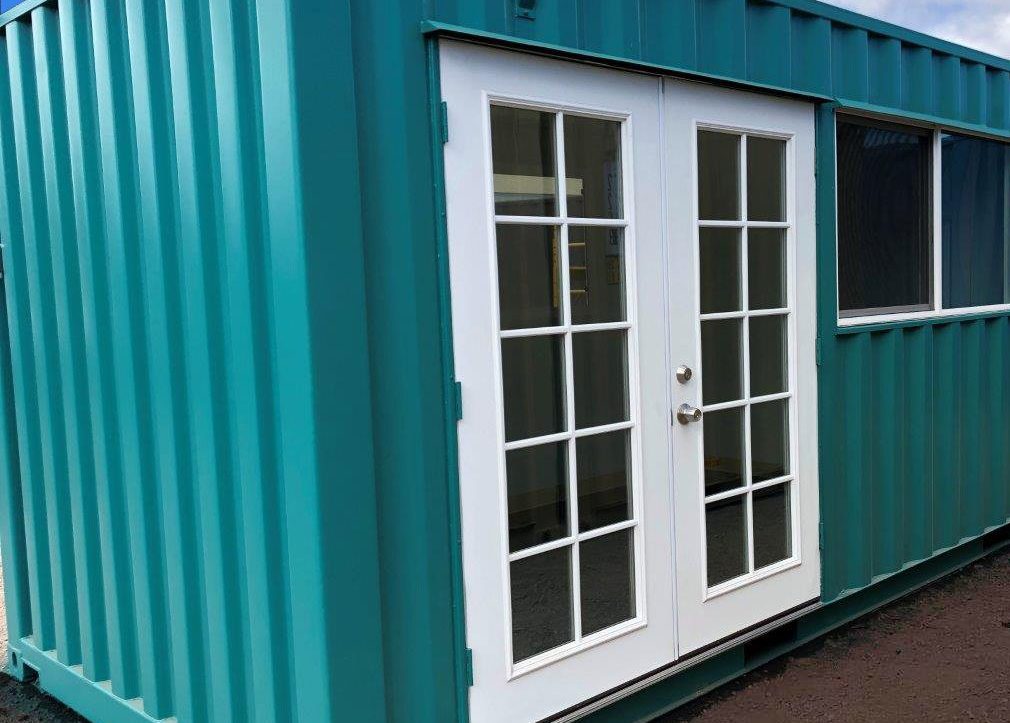
Arizona ADU & casita law
Arizona ADU & Casita Laws, Explained
Arizona created a statewide right to build a backyard casita. Here is exactly what the law says — the size caps, the setbacks, what your city can no longer require, and the HOA catch nobody mentions. Cited to the bill text.
Get a quote fast
What changed
Two bills rewrote the rules
If you looked into a casita before 2024 and were told no, that answer is very likely out of date. This guide is grounded in the two Arizona statutes that actually govern your project, cited to the bill text.
HB 2720 — cities and towns
Signed May 21, 2024. Requires every Arizona municipality with more than 75,000 residents to permit ADUs on any lot where a single-family home is allowed. Effective January 1, 2025. Added to state law as A.R.S. § 9-461.18 (Title 9, Chapter 4, Article 6).
HB 2928 — counties
Signed May 23, 2025. Extends substantially similar requirements to Arizona counties, with a compliance deadline of January 1, 2026. A county that did not adopt compliant rules faces ADUs being permitted on residentially zoned lots by default.
The provisions
What HB 2720 requires of a covered city
Read these as floors and ceilings on what your city may do — not as a description of your specific project. Your jurisdiction fills in the details within these bounds, and some cities are more generous than the statute requires.
| Provision | What the statute requires |
|---|---|
| Units permitted | At least one attached and one detached ADU as a permitted use on a single-family lot. |
| Second detached unit | On a lot of one acre or more, a second detached ADU must be allowed if at least one unit on the lot is a restricted-affordable unit. |
| Maximum size | 75% of the primary dwelling’s gross floor area, or 1,000 sq ft — whichever is less. |
| Minimum size a city must allow | Widely reported as at least 650 sq ft of living space (verify against your city ordinance). |
| Maximum setback | A city may not require rear or side setbacks greater than five feet from the property line. |
| Design matching | Prohibited. A city may not require the ADU to match the home’s exterior design, roof pitch, or finishing materials. |
| Parking | Prohibited. A city may not require additional parking or charge parking fees for the ADU. |
| Other bulk rules | A city may not apply stricter height, lot coverage, or frontage rules to the ADU than apply to the single-family home. |
| Long-term rental | Protected. A city may not prohibit leasing the ADU separately on a long-term basis. |
| Occupant relationship | Prohibited. A city may not require any family or employment relationship between the occupants. |
These limit your city — not your HOA
Everything above constrains what a municipality may require. Two things state law does not override: your HOA’s CC&Rs and short-term rental regulation. Read the HOA section below before you plan anything.
What your city lost
The restrictions cities can no longer use
The value of HB 2720 is less in what it permits and more in what it took away from cities. These are the exact tools jurisdictions used to make ADUs impossible on a normal lot — all now off the table for covered cities.
Oversized setbacks
The big one. Cities used 10–20 ft setbacks to make a casita physically impossible on a standard lot. The cap is now five feet.
Design-match mandates
No more requiring your casita to match the house's stucco, roof pitch, and trim — a rule that quietly doubled some budgets.
Extra parking
Cities can no longer force you to add a parking space or pay a parking fee for the unit. On a small lot that requirement alone killed projects.
Owner-occupancy for long-term rental
A city cannot require you to live on the property to lease the casita long-term, nor demand any relationship between occupants.
The 75,000 threshold
Which Arizona cities are covered
HB 2720 applies to municipalities with more than 75,000 residents. By current population, that captures most of the places people actually want a casita.
Covered by the municipal statute: Phoenix, Tucson, Mesa, Chandler, Scottsdale, Gilbert, Glendale, Tempe, Peoria, Surprise, Goodyear, Buckeye, Yuma, Avondale, Flagstaff, and other municipalities at or above the threshold.
Smaller towns — Prescott, Sierra Vista, Lake Havasu City, Kingman, Show Low, Queen Creek, and similar — sit under the 75,000 municipal threshold. A property there may instead be reached by HB 2928 if it is on unincorporated county land, or may be governed by the local ordinance. This is exactly the kind of edge case worth one phone call to the planning department before you plan anything.
Population figures move and are evaluated against current census data. If your city is near the line, confirm its status — do not rely on this list.
The HOA catch
Your HOA can still say no
This is the caveat the headlines skipped, and the one that surprises people after they have already spent money on plans.
HB 2720 constrains cities and counties. It does not touch a private homeowners association.
If your HOA’s CC&Rs prohibit or restrict accessory dwelling units, the HOA generally still governs your lot — the new state zoning law does not override it. “Casitas are legal in Arizona now” is true of the city’s zoning power and can be false of your specific lot if you are in an HOA that bans them.
So before anything else:
- Read your CC&Rs, specifically for accessory structures, dwelling units, guest houses, and rentals
- Check for architectural-review requirements — some HOAs allow ADUs but gate them behind approval
- If the CC&Rs are silent, ask the HOA in writing rather than assuming
Where we can help
This page summarizes the public law in plain English, current as of July 2026. Your HOA documents are a separate layer worth reading closely, and a real estate attorney is the right call for anything turning on the fine print. For the parts about steel, insulation, and Arizona heat, talk to us — that is what we build.
From law to keys
How an Arizona casita project actually runs
Five stages. The one that takes longest is the one nobody controls — plan review — which is why confirming eligibility first matters.
Confirm you can build
City covered by HB 2720 or county under HB 2928, and — critically — your HOA does not prohibit it. This step is free and saves the most heartache.
Scope the lot
Where the casita goes, where utilities run from, setbacks, and the real site work. Utility distance is usually the biggest cost variable, and it is knowable up front.
Design & plans
We design a floor plan within the size cap. Your licensed general contractor partner brings the structural engineering and the permit-ready plan set for your jurisdiction.
Permit
Your licensed general contractor partner submits the plans to the city or county. This is the schedule driver and the part nobody controls — the review clock is theirs.
Build, set & connect
Your casita is built off-site while permitting runs, then your licensed general contractor partner sets it on the foundation, connects it, and takes it through final inspection.
Answers
Arizona ADU & casita law questions
Two laws changed the rules. HB 2720, signed May 21, 2024 and effective January 1, 2025, requires every Arizona city with more than 75,000 residents to allow accessory dwelling units (ADUs) — casitas — on any lot where a single-family home is allowed. HB 2928, signed May 23, 2025, extended substantially similar requirements to counties, effective January 1, 2026. Together they created a statewide right to build a backyard casita that did not exist before. Cities and counties still set the details, but a blanket local ban is no longer permitted in the covered areas.
A covered city must allow an ADU up to 75% of the gross floor area of your primary home, or 1,000 square feet, whichever is less. On a 1,200 sq ft home, 75% is 900 sq ft and that is your ceiling. On a 2,000 sq ft home, the 1,000 sq ft cap governs. Widely reported guidance also holds that a city must allow an ADU of at least 650 square feet of living space — verify that minimum against your city ordinance, as it is a floor on what the city may restrict rather than a limit on you.
A covered municipality must allow at least one attached and one detached ADU as a permitted use on a single-family lot. On a lot of one acre or more, a second detached ADU must be allowed if at least one of the units is a restricted-affordable unit. That is the statutory floor — your specific city may allow more.
HB 2720 stripped away the tools cities used to make ADUs infeasible. A covered city may not: require setbacks greater than five feet; require your casita to match the primary home's exterior design, roof pitch, or finishing materials; impose stricter height, lot-coverage, or frontage rules than apply to the main house; require additional parking or charge parking fees; prohibit renting the casita separately on a long-term basis; require any family or employment relationship between the occupants; or require restrictive covenants on residentially zoned property. These are limits on the city, not descriptions of your project.
This is the one place the state kept a string attached. For an ADU built on or after the effective date and operated as a short-term rental, the owner must reside on the property (with limited exceptions). So you can Airbnb a new casita, but generally only if you live on the lot. Long-term rental is fully protected — a city cannot stop you leasing the casita separately on a long-term basis. And note that cities regulate short-term rentals under separate ordinances on top of this, so check both.
Yes, and this is the single most important caveat. HB 2720 constrains cities and counties — it does not override a private homeowners association. If your HOA's CC&Rs prohibit or restrict ADUs, the HOA generally still wins on your lot, state zoning law notwithstanding. Before you plan anything, read your CC&Rs. This is the number-one question that trips people up, because the news coverage said "casitas are legal now" without mentioning the HOA layer.
HB 2720 applies to municipalities with more than 75,000 residents. By current population that includes Phoenix, Tucson, Mesa, Chandler, Scottsdale, Gilbert, Glendale, Tempe, Peoria, Surprise, Goodyear, Buckeye, Yuma, Flagstaff, and Avondale, among others. Smaller towns fall under the municipal threshold, but a property in unincorporated county land may be reached by HB 2928 instead. Population figures move and thresholds are evaluated against current data, so if your city is near the line, confirm its status rather than relying on any list.
The structure is the predictable part; what actually moves a casita budget is site work and — usually the largest single variable — how far utilities have to run to reach it. A casita 20 feet from your panel and sewer is a very different project from one 200 feet out across the lot. Impact fees, plan review, and utility connection fees are real line items that vary by jurisdiction. Send us your lot and we will scope the whole thing, including the parts that are not us.
Under HB 2720, a covered municipality that failed to adopt compliant regulations by January 1, 2025 must allow ADUs on residentially zoned lots without the limits it would otherwise have been able to set. HB 2928 built the same backstop into the county deadline of January 1, 2026. In practice this means the law has teeth: a city cannot simply refuse to act and thereby keep ADUs banned.
Ready to build
The law says yes. We build the casita.
Now that you know what is allowed, the next question is what fits your lot and your budget — and whether a container-based casita is the right tool for it.
We build the container and modular structure for your casita or ADU, and partner with a licensed general contractor to deliver it permitted — they handle permitting, foundation, and final install. The unit itself is insulated for real summer heat, built for the desert, and delivered on a weather-independent shop schedule. Our casita page walks through what we build and how it stands up to Arizona heat.
Sources for the legal claims on this page
Arizona HB 2720 (56th Legislature, 2nd Regular Session), enacted as Chapter 196 — session law text and Senate engrossed bill (PDF); codified at A.R.S. § 9-461.18 (Title 9, Chapter 4, Article 6). HB 2928 (2025) extends comparable requirements to counties. The 650 sq ft minimum is widely reported by Arizona ADU practitioners; verify it against your specific city ordinance. Summarized in plain English here, current as of July 2026. Statutes are amended and jurisdictions implement within these bounds differently. This is not legal advice — verify against current bill text and your local ordinance, and consult an attorney for your situation.
Find out what your lot can take
Send us your city and roughly what you want. We will tell you what the law allows on your lot and come back with a complete scope — the site work and utility runs included.