
The desert guide
How to Insulate a Shipping Container for Arizona Heat
In Phoenix summer sun an uninsulated steel container can pass 150°F inside — which is exactly why insulation matters. Everything that makes a container comfortable to use in August lives in the parts you never see. Here is what goes into cooling a container for real Arizona heat, and how we help you get it right.
Get a quote fast
Why it matters
Why insulation makes the difference in the desert
Steel is strong, secure, and built to last — and with the right insulation it becomes a comfortable, climate-controlled space. Understanding how heat moves through steel is what makes a container you can use every month of the year.
A shipping container is a thin steel skin with almost no thermal mass and high conductivity — so in the desert, insulation is what turns it into a comfortable space.
Three things happen under Arizona sun:
- The steel absorbs solar radiation across its whole surface, and a dark container skin can reach 160–180°F to the touch.
- Steel conducts that heat quickly to the interior, because there is no wall cavity to slow it down — which is exactly why insulation matters so much here.
- A sealed box holds heat, so an uninsulated interior can climb past 150°F on a 115°F day. Insulation and cooling keep the inside comfortable instead.
Bare containers are perfectly good for tools, steel stock, and equipment that does not mind the heat. For anything you occupy, anything with electronics, or anything heat-sensitive, insulation and cooling keep it usable all year.
Insulation first, then cooling — and here is why
The right order is to insulate before sizing the AC. Insulation slows the heat gain to a rate a right-sized unit stays comfortably ahead of, so cooling is steady and affordable rather than a losing battle against the sun. Insulate first; size the cooling to match. It is how an occupied container stays comfortable through August.
What goes into it
The four things that make a container usable in August
None of these is exotic, and together they are what make a container comfortable in August. Which ones your build needs comes down to how you will use the space — we will walk you through the options.
1. Insulation on the steel
Closed-cell spray foam applied directly to the corrugated steel is the go-to here — it bonds with no gap, delivers a high R-value per inch, and doubles as a vapor and air barrier, which also solves container condensation. On steel in the desert, it is the insulation that does the most in the least space.
2. Cooling that fits the space
A mini-split or packaged AC matched to your space and how you use it — not a rule of thumb. Insulate first and a right-sized unit stays comfortably ahead of the heat, so the space holds a steady temperature and the power bill stays reasonable.
3. A cool roof
The roof takes the sun straight down all afternoon, so it is the biggest heat-gain surface — and a reflective elastomeric coating bounces that solar radiation off for very little money. For occupied builds, added roof shade goes further still.
4. Sealing the details
Every steel penetration — door frames, window frames, mounts — is a spot where heat can bridge in. Sealing them is what keeps the insulation performing at full value and the whole assembly consistent. It is the invisible detail behind a low AC bill.
Insulation options
Why closed-cell foam wins here specifically
Here is how the common insulation approaches perform on steel in a hot, high-UV, big-swing climate — and why closed-cell foam is the one most builders reach for here.
| Approach | How it performs on steel in the desert | Verdict |
|---|---|---|
| Closed-cell spray foam | Bonds directly to corrugated steel with no gap; high R per inch; also a vapor and air barrier, so it stops condensation too. Handles thermal bridging when detailed right. | Best all-rounder here. |
| Rigid foam board | Good R-value; it just needs careful furring and sealing to fit the corrugations. Workable in the right assembly. | Situational. |
| Fiberglass batts | Made for framed cavities, so on bare corrugated steel it leaves gaps and does not control vapor. Right at home in a stud wall, less so in a container. | Better in a stud wall. |
| Reflective / radiant barrier alone | Reflects radiant heat and is inexpensive — a great partner to foam, though on its own it does not add the conductive R-value an occupied space needs here. | Great alongside foam. |
| No insulation (bare) | Interior can pass 150°F in summer sun — ideal for storage that does not mind heat. | Great for tools. |
R-value targets depend on use, glazing, and orientation, and because steel conducts heat the whole assembly — insulation, sealing, and roof together — works best as one system, so the finished space performs the way the numbers promise.
Monsoon season
Built for the storm season too
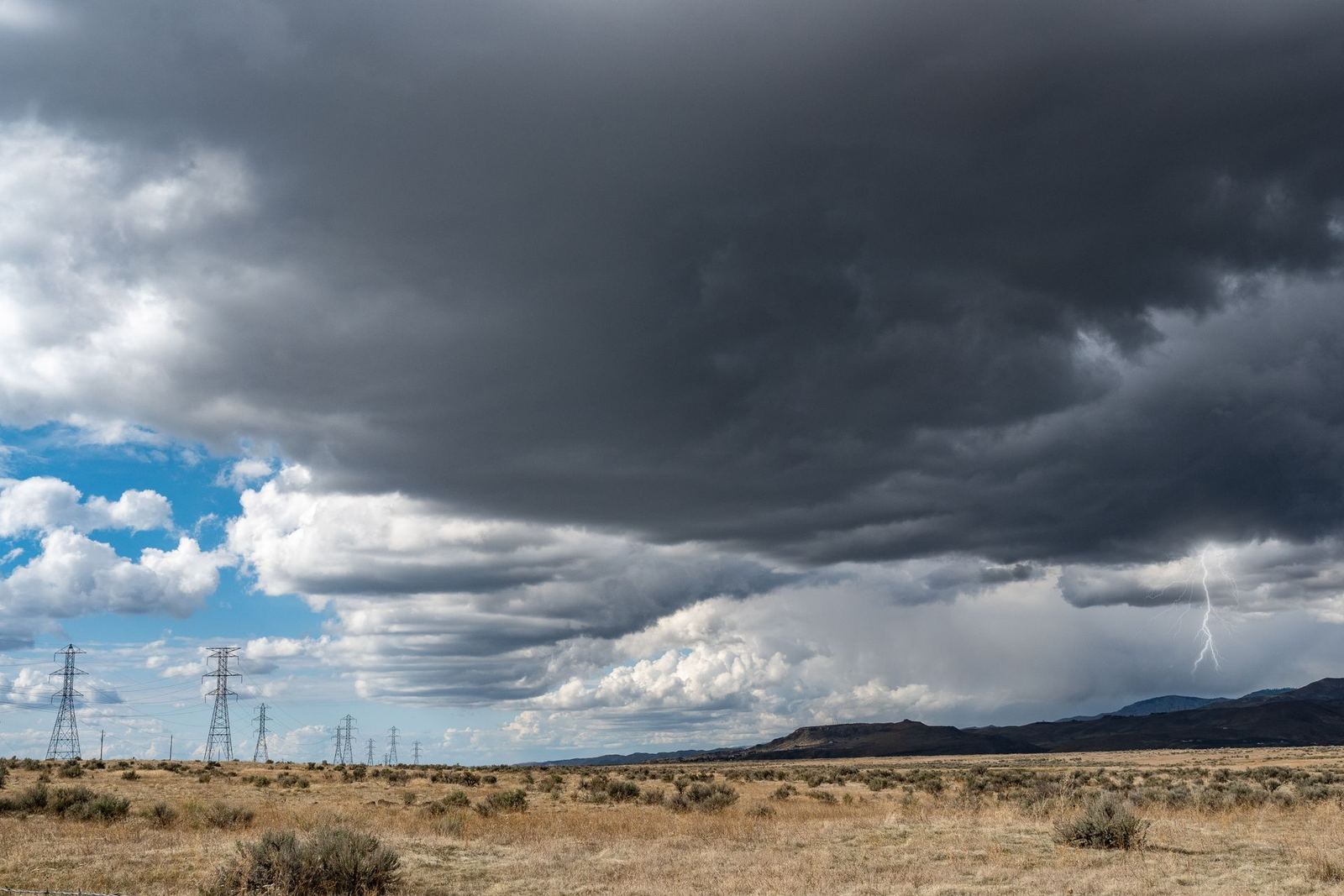
Heat is the headline, but July also brings wind, dust, and sideways rain. A container that seals is ready for all of it.
The monsoon question
No, a haboob is not going to move your container
The internet worries about tornadoes picking up containers. In Arizona the real question is monsoon and haboob wind — and the answer is reassuring, with a few simple details we build around.
A 40ft container is roughly 8,000 lbs empty, far more loaded, with a low profile and a frame engineered to be stacked nine-high on a ship in an ocean swell. Monsoon downbursts and haboobs are powerful, but they are very unlikely to relocate a properly sited container.
The monsoon details we plan for are simple, and handling them is routine:
- Wind-driven water stays out with good door seals and a roof that sheds cleanly.
- Debris in a haboob bounces off the steel; we place windows and exterior fixtures with sensible siting and protection.
- Runoff is handled by siting the container out of the drainage path and on firm, graded ground.
The desert is kind to steel
The two things we build for are UV and thermal cycling, not rust — dry heat is far gentler on steel than a coastal or humid climate. Years of sun can degrade paint, seals, and sealant, and the daily heat-and-cool cycle can work fasteners and caulk loose, so we use UV-stable sealants and seals rated for the exposure. A container we build for Arizona is made to take the sun head-on.
How it comes together
From bare box to usable in any month
Tell us the use and the site
Occupied office, casita, cold-sensitive storage? Sun exposure and orientation? That guides the whole approach — there is no one-size build.
We match it to your build
Insulation, cooling, and roof strategy chosen to fit how you will use the space — as one system, not a parts list.
Built to your spec
Insulated, wired, and finished, then checked over before it leaves the yard so the doors seal and everything works.
Delivered and set
On your site and set, ready to run through an Arizona August.
Answers
Container insulation & heat questions
Hotter than the air outside. In direct summer sun, an uninsulated steel container can climb well past 150°F inside on a 115°F day — the steel skin absorbs solar heat and radiates it inward. That is exactly why insulation matters. Insulation and right-sized cooling keep an occupied office, casita, or climate-sensitive storage comfortable right through August. A bare container is still perfectly good for tools and materials that do not mind the heat.
Closed-cell spray foam applied directly to the steel is the one most builders favor for this climate. Spray foam bonds to the corrugated steel with no gap, delivers a high R-value per inch, and doubles as a vapor and air barrier, so it handles condensation as well as heat. That all-in-one performance is what makes it a strong choice for an occupied Arizona container.
Because insulation is what makes cooling efficient and affordable. On its own, an uninsulated steel box gains heat about as fast as an AC can remove it, so the unit works overtime. Add closed-cell foam first and you slow the heat gain to a rate a right-sized unit stays comfortably ahead of — steady comfort and a reasonable power bill. That is why the right order is to insulate first and then size the cooling to match; together they keep the space cool through the worst of summer.
It depends on what the space is for, how much glazing it has, and how it faces the sun. As rough guidance, occupied Arizona container space typically wants roughly R-19 or better in the walls and more in the roof, which closed-cell foam reaches in a few inches. Because steel conducts heat, the whole assembly — insulation, sealing, and roof together — works best as one system, so the finished space performs the way the numbers promise. You get a space tuned to your actual use, not a one-size spec.
The roof is the single largest heat-gain surface on a container, because it takes the sun straight down for the whole afternoon. A ventilated over-roof is a second roof built above the container roof with an air gap between them: it shades the steel and lets the trapped heat convect away instead of driving into the interior. On a valley build it can take a meaningful bite out of cooling load for a modest cost. In the high country — Flagstaff, Show Low, Prescott — the same structure carries snow load. Whether it is worth it depends on your use and location, and we will talk you through it.
Yes, and it is one of the cheapest things you can do. A white or reflective elastomeric coating on the container roof reflects a large share of incoming solar radiation instead of letting the dark steel absorb it. It is not a substitute for insulation — it reduces the heat trying to get in, while foam slows what does get in — but the two together are far better than either alone. For a storage container that just needs to run cooler, a cool-roof coating alone can make a real difference.
Less than in a humid climate, but not zero. Arizona has big day-to-night temperature swings, and a steel container that is warm inside and cool outside overnight can sweat on the interior steel — sometimes called "container rain." Closed-cell spray foam handles this automatically, because it is also a vapor barrier and keeps interior air off the cold steel, so the moisture never forms. It is one more reason foam is the go-to for any occupied build here: heat and humidity solved in a single step.
This is the Arizona version of the tornado question, and the answer is reassuring. A 40ft container weighs roughly 8,000 lbs empty and far more loaded, with a low profile and a heavy steel frame engineered to be stacked nine-high and cross an ocean. Monsoon downbursts and haboob winds are strong, but they are very unlikely to move a properly sited container across your lot. The details we plan for are simple and manageable: good door seals keep wind-driven water out, a roof that sheds cleanly avoids ponding, and sensible siting keeps debris and runoff away. Handle those and your container rides out the storm.
The dry climate is genuinely kind to steel — far less rust than a coastal environment. The two things that matter here are UV and thermal cycling: years of intense sun can degrade paint, seals, and sealant, and the daily expand-contract of steel heating and cooling can work fasteners and caulk loose. UV-stable sealants, seals rated for the exposure, and proper expansion detailing are what make it last. A container built for the desert is made to take the sun head-on for the long haul.
Where this applies
Where insulation makes the difference
Modular & mobile offices
A job-site office your crew will actually work in through August, not avoid.
Modular offices →
Casitas & container homes
Insulation is where a livable dwelling starts. We build the insulated structure and partner with a licensed general contractor to deliver your casita permitted.
Casitas & ADUs →
Custom modifications
Insulation is the most important modification for any occupied Arizona container.
Custom builds →
Climate-sensitive storage
Electronics, pharma, documents — anything that cannot take 150°F stays safe with insulation and cooling, or in one of our refrigerated units.
Refrigerated units →
Where we build
Serving all of Arizona
Valley builds get sun-first spec. High-country builds — Flagstaff, Show Low, Prescott — get the snow-load and freeze version. Same principle, different climate.
Build it for the summer that actually happens here
Tell us what the container is for and where it will sit. We will help you get the insulation, cooling, and roof right for real Arizona heat, so it is comfortable from the first summer on.